
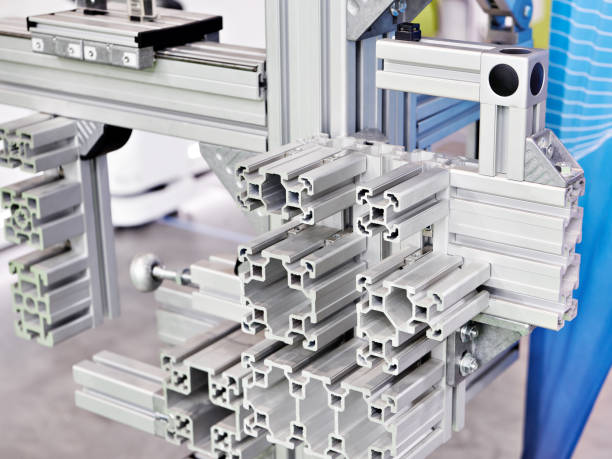
Growth often changes the way a workstation, guard, enclosure, or production frame needs to function. Modular construction allows many existing structures to accept new sections without complete replacement. A properly planned aluminum framing kit can usually expand as equipment, floor layouts, and operating requirements develop.
Yes, most modular systems are designed for future add-ons
Modular framing systems use separate profiles, connectors, fasteners, and accessories that can be removed or repositioned as needed. This construction method differs from welded frames, where a later change may require cutting, grinding, refinishing, and rebuilding part of the structure. Expansion may involve extending a table, widening a machine guard, raising an enclosure, adding storage, or creating another equipment bay.
Planning ahead makes later work easier. Open connection points, accessible slots, spare mounting space, and clear drawings give installers more options when the original frame needs to grow. MiniTec Aluminum Framing supports this type of development because its components form a system rather than a permanently fixed assembly.
Standard T-slot aluminum extrusions allow you to bolt on new sections easily
Channels running along each T slot aluminum extrusion profile accept nuts and fasteners at many positions. Installers can attach cross members, upright posts, braces, shelves, or mounting plates without drilling a new hole through the main rail. Added sections can often connect directly to the existing frame through corner brackets, joining plates, or internal fasteners.
Bolted construction also limits disruption around operating equipment. Technicians may assemble the extension separately, move it into position, and join it to the original structure during a planned shutdown. An extruded aluminum T slot system therefore helps facilities complete many upgrades without sending the full frame back to a fabrication shop.
Extension kits from the same manufacturer usually guarantee compatibility
Matching components from one product family reduces uncertainty during an expansion. Slot shape, profile dimensions, fastener threads, bracket spacing, and accessory sizes must work together for the new section to fit correctly. Parts that look similar may still use different channel widths or connection methods. Manufacturer consistency also helps preserve the structure’s appearance and performance. MiniTec extruded aluminum framing can be expanded with profiles and hardware intended for the same system, which lowers the risk of loose connections or improvised adapters. Product records and original part numbers make it easier to identify suitable additions years after the first installation.
Custom expansions are possible by cutting and joining bulk aluminum profiles
Standard extension kits do not cover every layout. Custom additions may require bulk aluminum framing material cut to specific lengths, along with drilled access holes, tapped ends, or angled cuts. Skilled fabricators can shape those profiles around machinery, columns, conveyors, utilities, and other fixed features.
Accurate measurements matter before cutting begins. Small errors can create uneven joints, misaligned panels, or openings that no longer match doors and accessories. Detailed drawings should show the existing frame, proposed dimensions, connector locations, and any equipment that the enlarged structure must support.
Structural integrity and weight limits must be re-evaluated before adding on
Extra size changes the forces acting on the original assembly. Longer spans may bend more, added shelves can increase concentrated loads, and taller sections may place greater stress on corner joints. A frame that performed well in its first configuration may need stronger profiles or additional bracing after expansion.
Engineering review should consider deflection, connection strength, load direction, vibration, and the revised center of gravity. T slot extrusion components come in different sizes and wall designs, so a stronger member may be needed where the new load enters the structure. Safety factors should also account for tools, products, panels, and future equipment not included in the initial build.
Existing fastners and brackets can often be loosened and rearranged
Reusable hardware gives modular framing much of its flexibility. Corner brackets, joining plates, T-nuts, hinges, handles, and mounting blocks can often move to new locations instead of being discarded. Rearranging these parts may free space for a longer rail, wider opening, or different equipment position.
Inspection remains important before reuse. Threads should show no stripping, brackets should remain straight, and fasteners should not have corrosion or damaged heads. Worn pieces cost less to replace than the problems caused by a joint that loosens after the expanded frame returns to service.
Foundation or base stability might need reinforcement to support the extra size
A larger structure creates a different footprint and may shift weight beyond the original support points. Additional leveling feet, casters, floor plates, or concrete anchors may be needed to stop the frame from rocking, sliding, or tipping. Extensions built on only one side deserve particular attention because they can move the center of gravity away from the original base.
Floor conditions also affect the solution. Uneven concrete may require adjustable supports, while mobile frames need casters rated for the total revised load. Wider bases and lower equipment placement can improve stability without making the upper frame unnecessarily heavy.
Enclosures, panels, and accessories can be integrated at any point post-installation
Later upgrades are not limited to structural rails. Polycarbonate panels, wire mesh, doors, shelves, cable trays, monitor mounts, lighting, and control boxes can attach to the framing slots after installation. New guarding can also close areas exposed by added machinery or changed workflows.
Compatibility checks help those accessories fit cleanly. Panel thickness, hinge position, door clearance, cable routing, and maintenance access should be reviewed before parts are ordered. MiniTec Solutions provides modular profiles, connectors, and related components that can help manufacturers expand an existing aluminum framing kit while keeping the updated structure stable, organized, and ready for further changes.