
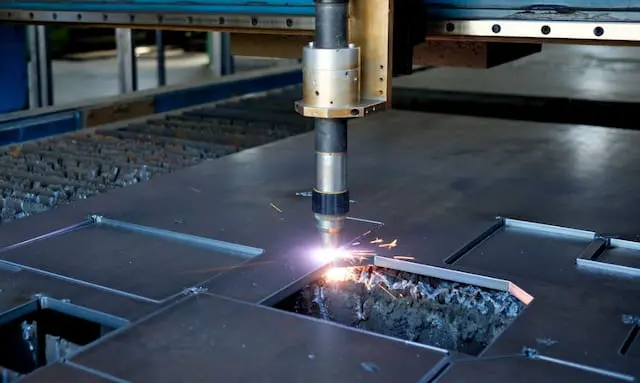
Metal thickness changes the entire personality of a cut. Thin sheet wants speed and restraint, while heavy plate demands heat, patience, and stable motion. A plasma cutter performs best when amperage, air quality, torch height, travel speed, and material type work together instead of fighting each other.
Cutting Speed and Feed Rate
Thin metal rewards a fast torch because the arc can pass through the sheet quickly without lingering long enough to warp the surface. Slow movement on light-gauge material can widen the kerf, overheat the edge, and leave a rough trail that looks more melted than cut.
Thicker plate needs a steadier feed rate because the arc must push fully through the material before the torch moves ahead. A CNC plasma cutter helps control that pace with programmed motion, which keeps the cut more consistent than hand-guided work across long profiles, slots, brackets, and production parts.
Duty Cycle Demands and Thermal Load
Long cuts through thick steel place heavy strain on the machine because the system must hold a strong arc for a longer stretch. Duty cycle matters here because it tells operators how long the equipment can cut at a certain output before it needs time to cool.
Heat buildup also changes how the plate behaves during the job, especially when several parts sit close together in one sheet. A CNC plasma cutting machine can sequence cuts in a smarter order, helping reduce distortion by spreading thermal load instead of concentrating heat in one tight area.
Kerf Width and Material Wastage
Narrow kerf cuts matter more than many shops realize because each pass removes material from the plate. Light sheet can lose accuracy fast when the kerf becomes too wide, since small holes, tabs, and slots may drift away from their intended size.
Heavy plate often creates a wider kerf because the arc needs more energy to push through the full thickness. Skilled setup from a CNC machine company can help match consumables, amperage, and torch height so the finished part stays closer to the drawing while wasting less usable stock.
Dross Formation and Cleanliness of Cut
Dross forms when molten metal sticks to the underside or edge of the cut instead of clearing cleanly away. Fast cutting on thick plate may leave hard dross because the arc does not fully finish the cut, while slow cutting on thin material can leave softer buildup from excess heat.
Clean edges depend on the right balance between speed, gas flow, amperage, and material thickness. Operators searching for CNC companies near me often look for teams that understand this balance because less dross means less grinding, better weld prep, faster assembly, and cleaner finished components.
Gas Pressure and Flow Rate Requirements
Compressed air or plasma gas does more than support the arc; it blows molten metal out of the cut path. Low pressure can leave slag and an uneven edge, while excessive flow may disturb the arc and reduce cut stability.
Material thickness affects how much gas force the process needs to clear the kerf properly. Thicker steel usually requires stronger, well-regulated flow, and a good plasma cutter setup uses dry, clean air because moisture and oil can shorten consumable life and weaken performance.
Arc Stability and Pilot Arc Longevity
Stable arcs make smoother cuts because the heat stays focused where the torch should be working. Thin material can suffer from jumpy motion or overburn if the arc energy is too high, while thick plate can lose cut quality if the arc stretches, flickers, or trails behind the torch.
Pilot arc strength matters during piercing, edge starts, and interrupted cuts on expanded metal or uneven surfaces. A CNC plasma cutter with reliable ignition and proper consumables helps maintain arc behavior across changing thicknesses, which supports more predictable results from the first pierce to the final edge.
Bevel Angle and Edge Angularity
Bevel angle appears when the top and bottom of the cut do not line up perfectly. Thin sheet usually shows less angularity because the arc passes through quickly, but thicker material gives the plasma stream more distance to widen, lag, or taper before it exits.
Edge squareness improves when torch height, travel speed, amperage, and consumable condition stay within the correct range. Precision-focused shops use a CNC plasma cutting machine to reduce sudden movement changes, helping parts fit better during welding, bolting, and fixture placement.
Maximum Pierce Capacity vs. Edge Start Capability
Piercing through thick plate is harder than starting from the edge because the arc must punch straight down through solid material. This creates more splashback, stresses consumables, and often requires different timing than cutting from an open edge. Edge starts can handle thicker material because molten metal has a place to escape as the arc begins moving. For teams working with automated robotics manufacturing and precision machining, Amtec Solutions Group offers helpful insight into how a plasma cutter handles different thicknesses, especially when cut quality depends on the right setup choices